
India's toll collection growth is projected to moderate to 5-7 per cent year-on-year in FY27, a 150-200 basis points reduction, primarily due to the economic impact of the West Asia conflict and a slowdown in commercial traffic, according to Crisil Ratings.
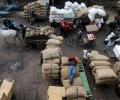
India is likely to grow by 7.5 per cent in the first quarter of the current financial year, driven by rising aggregate demand and non-food spending in the rural economy, according to an article in the RBI's May Bulletin released on Tuesday. The Indian economy has demonstrated marked resilience in the face of geopolitical headwinds impacting the supply chain, said an article on the state of the economy published in the May Bulletin.
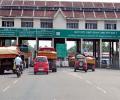
FASTag is a prepaid tag, affixed on vehicle's windscreen, that enables automatic deduction of toll charges and lets the vehicle pass through the toll plaza without stopping for the cash transaction.

The growth in the contact-intensive portion of the economy trailed our expectation, highlighting how imperative it is for confidence to improve, either through accelerated vaccinations or otherwise, to drive a sustainable recovery in these sectors, asserts Aditi Nayar.

Moody's Investors Service on Wednesday slashed India's growth projection to 9.6 per cent for the 2021 calendar year, from its earlier estimate of 13.9 per cent, and said faster vaccination progress will be paramount in restricting economic losses to June quarter.

Moody's on Monday slashed India's growth forecast for 2020 to 5.4 per cent from 6.6 per cent projected earlier, on slower than expected economic recovery. In its update on Global Macro Outlook, Moody's Investors Service said India's economy has decelerated rapidly over the last 2 years and economic recovery is likely to be 'shallow'.
Rating agency Icra on Wednesday said while there is some evidence of the economic recovery becoming broad-based in the third quarter of fiscal 2022, it is yet to attain the durability being sought by the Monetary Policy Committee (MPC) as a precursor to policy transmission. The agency expects the real GDP to expand 6-6.5 per cent year-on-year in the third quarter of FY2022 (+8.4 per cent in Q2 FY2022). It also sees the RBI maintaining the status quo in the upcoming monetary policy review to be held in February.
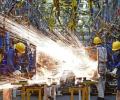
The country's manufacturing sector activity recorded another sharp deterioration in business conditions during May as new orders placed with producers continued to fall after April's record contraction, leading firms to cut jobs at the quickest pace on record, a monthly survey said on Monday.

'EV-charging is the next big opportunity after fuelling'

A total of 37 deaths were reported since Thursday evening of which 14 fatalities were reported from Maharashtra, nine from Gujarat, three from Uttar Pradesh, two each from Andhra Pradesh, Delhi, Madhya Pradesh,Tamil Nadu and Telengana and one from Karnataka, ministry data stated.

With the world's worst outbreak of COVID pandemic stalling a nascent economic recovery, the government has begun assessing the impact of the second wave of infections on different sectors and may look at providing support at an appropriate time to segments requiring fiscal help. Some of the economic indicators, including the Goods and Services Tax (GST) collections, still provide confidence and incoming data will throw some more light on the state of the economy, sources said. Services sectors like hospitality, tourism and aviation which had just started recovering were hit hard by the second wave of COVID, the sources said, adding these segments might need some support on an urgent basis from the government.
The headline seasonally adjusted IHS Markit India Manufacturing Purchasing Managers' Index (PMI) fell to 27.4 in April, from 51.8 in March, reflecting the sharpest deterioration in business conditions across the sector since data collection began over 15 years ago. The index slipped into contraction mode, after remaining in the growth territory for 32 consecutive months. In PMI parlance, a print above 50 means expansion, while a score below that denotes contraction.

'Imran Khan hopes to fulfill the dreams of the founders of of Pakistan in establishing an Islamic Welfare State.' 'The grave situation of the economy makes realisation of this dream very difficult,' points out Colonel R N Ghosh Dastidar (retd).

From farmers to cement, steel, logistics, transportation and automobiles, the back-end is struggling to get going due to the liquidity crisis.
